The Secret to Raising Kind Kids: Why Stories Work Better Than Lectures
If you’ve ever wondered why your child suddenly refuses to share, gets frustrated over small things, or seems less kind than you know they can be — you’re not alone.
Many parents worry:
“Am I doing something wrong?”
“Why is my child kind one moment and difficult the next?”
The truth is reassuring: struggling with kindness is a normal part of growing up.
Why Kindness Is Hard for Young Kids
Young children are still learning how the world works — and how they fit into it.
At ages 4–8, kids:
- Are in a peak stage of social-emotional development
Feel emotions much bigger than their ability to explain them
Are still developing impulse control
Often think from their own point of view first
This doesn’t mean they are selfish or unkind. It means they are learning.
Kindness isn’t something children absorb just by being told what’s right or wrong. They need to see it, feel it, and practice it in a way that feels safe.
Why Lectures Don’t Work (And What Does)
When adults correct behavior with rules or long explanations, children often:
Shut down
Feel pressure or shame
Focus on avoiding mistakes instead of understanding others
What works better?
✔ Stories ✔ Play ✔ Creative activities
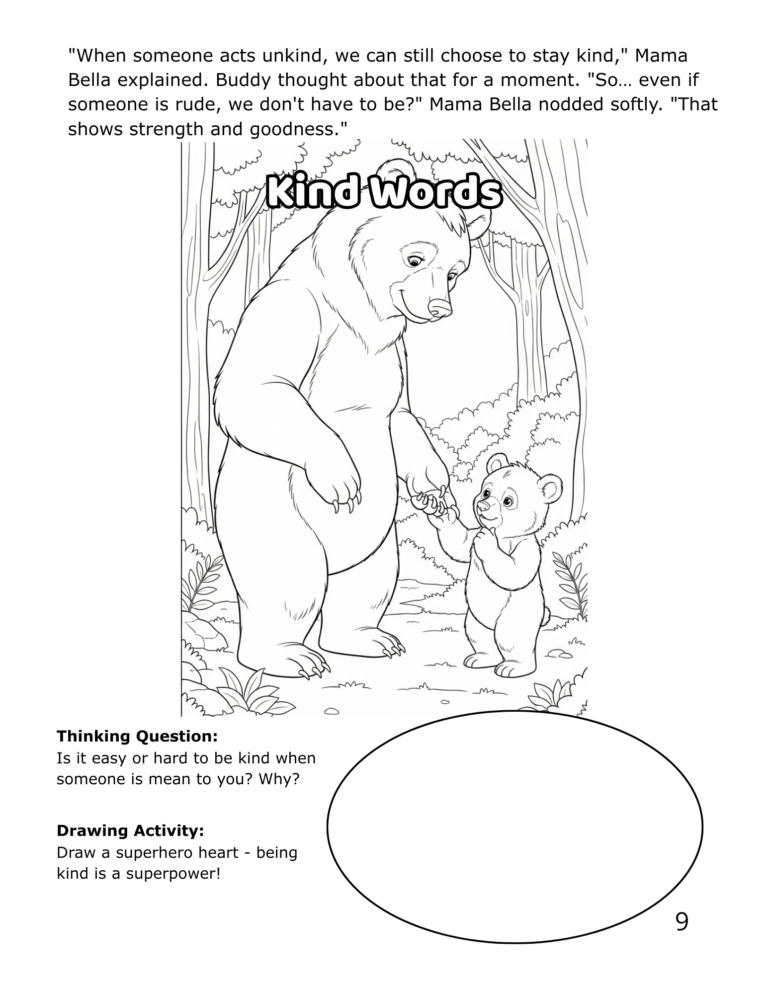
Stories allow children to explore emotions without being the one in trouble. Stories provide a “mirror and a window.” Children see their own struggles reflected in characters, and a window into how to handle them with grace—all in a safe, shame-free environment.
How Stories and Coloring Build Kindness Naturally
When a child follows a story character, something powerful happens:
They recognize their own feelings in the character
They see the consequences of actions gently
They explore solutions without pressure
Adding coloring and creative prompts deepens this experience.
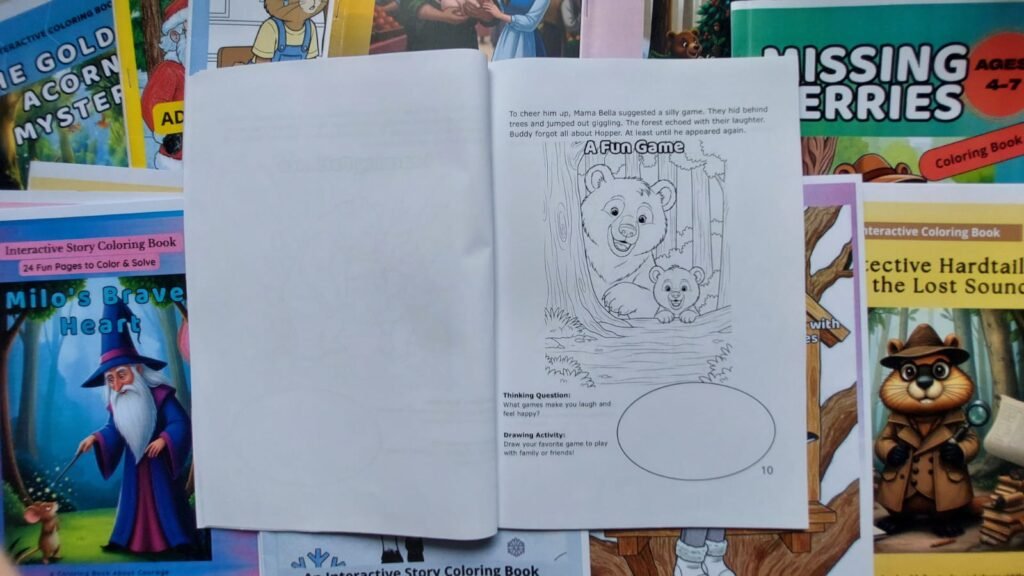
Coloring is a form of active mindfulness. It slows the pace, helps children relax, and gives the story’s message space to settle in.
While their hands are busy, their minds are open to processing emotions like empathy, patience, and understanding.
Instead of being told “You should share,” a child thinks:
“What would I do if I were in that story?”
That’s real learning.
A Simple Example From a Child’s World
Imagine a character who wants to help a friend — but doesn’t know how. They hesitate. They make a small mistake. They learn.
Children see themselves in moments like this. They understand that kindness isn’t about being perfect — it’s about trying again.
Through stories, kids learn:
It’s okay to ask for help
Others have feelings too
Mistakes don’t define who you are
- One unkind moment doesn’t make you a bad kid
A Gentle Way to Support Kindness at Home
You don’t need long talks or strict rules.
Instead, try:
Reading stories together
Asking open questions instead of giving answers
Letting your child color or draw their thoughts
Simple questions like:
“How do you think the character felt?”
“What would you do next?”
These moments build empathy naturally — without forcing behavior.
Screen-Free Stories That Grow With Your Child
In a world full of fast screens and quick entertainment, children need slower, calmer spaces.
Story-based coloring activities combine:
Reading
Creativity
Emotional growth
All in one gentle experience.
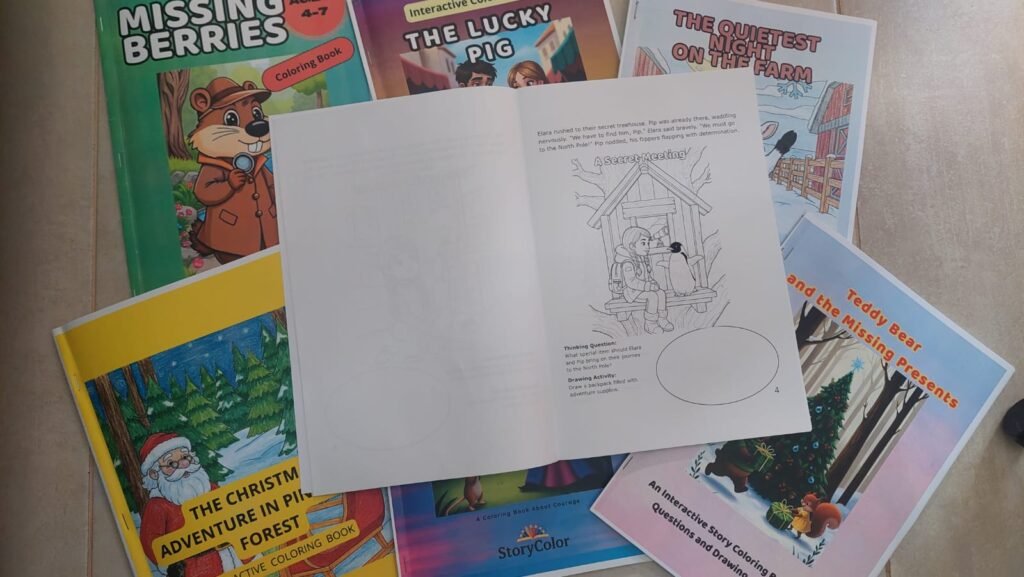
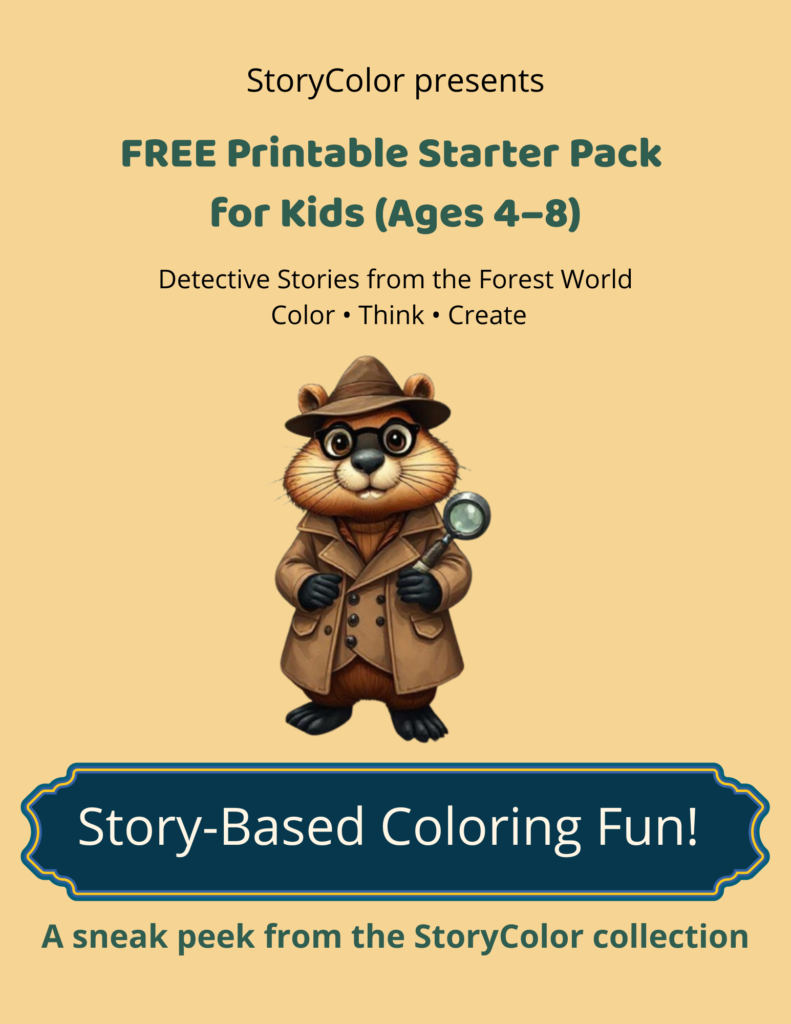
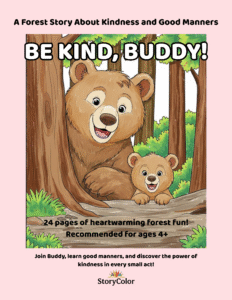
Take a look at our free story and coloring sample here. FREE Sample
Grab Your Free Kindness Starter Pack
In a world full of fast screens and quick entertainment, children need slower, calmer spaces to grow.
Our story-based coloring activities combine reading, creativity, and emotional learning into one gentle, screen-free experience.
Download your free printable story and matching coloring pages — and enjoy a calm, creative moment together.
A Final Thought for Parents
Kindness doesn’t appear overnight. It grows slowly — through stories, imagination, and feeling understood.
When children feel safe, they learn to care. And every story helps them grow in their own way.
StoryColor creates story-based coloring books that support emotional growth, creativity, and screen-free learning for children.