How to Raise an Eco Hero — Fun Nature Activities for Kids Ages 4–8
Use code ECOLAUNCH at checkout —
🌱 Claim Your FREE Copy →
Every parent wants to raise a child who cares about the world around them. But how do you teach a 4-year-old about recycling without making it feel like a lecture? How do you help an 8-year-old understand that their small actions actually matter?
The answer is simpler than you think — you make it fun.
Here are 5 proven ways to raise a little eco hero, starting today.
1. Make Nature Personal
Children protect what they love. Before they can care about “the environment,” they need to care about their tree, their river, their park.
Try this: Take a walk with your child and let them pick one special place in nature — a tree, a stream, a patch of flowers. Call it theirs. Visit it regularly. Let them notice when it changes.
When a child feels ownership over a piece of nature, protecting it becomes instinct.
2. Turn Recycling Into a Game
Chores feel like chores. Games feel like fun. The difference is framing.
Try this: Create a family recycling challenge. Who can collect the most recyclables in one week? Give each family member a color-coded bin. Celebrate the winner with a nature walk or a special activity.
Children as young as 4 can sort paper, plastic, and cans — they just need a reason to want to.
3. Read Eco Stories Together
Stories are how children make sense of the world. When a child sees a character they love facing a problem — and solving it — they internalize the lesson far more deeply than any lecture could achieve.
The best eco stories for young children share three things: relatable animal characters, a real problem that gets solved through teamwork, and a message that feels empowering rather than scary.
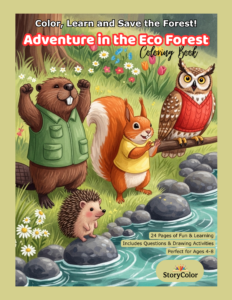
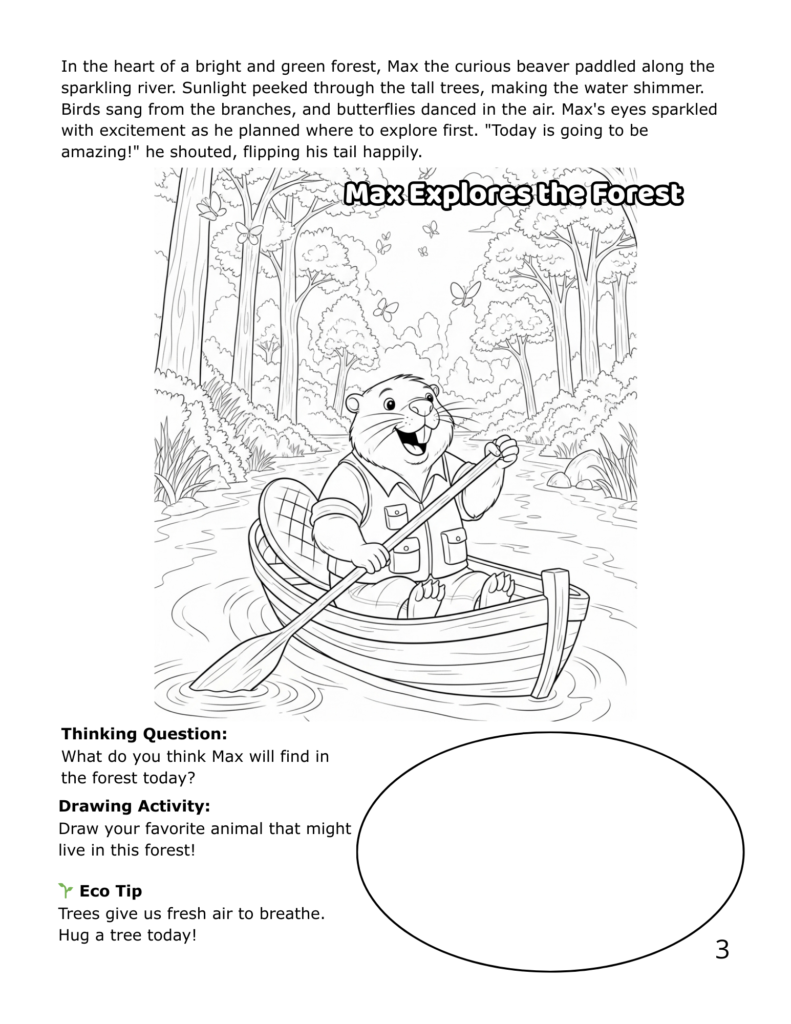
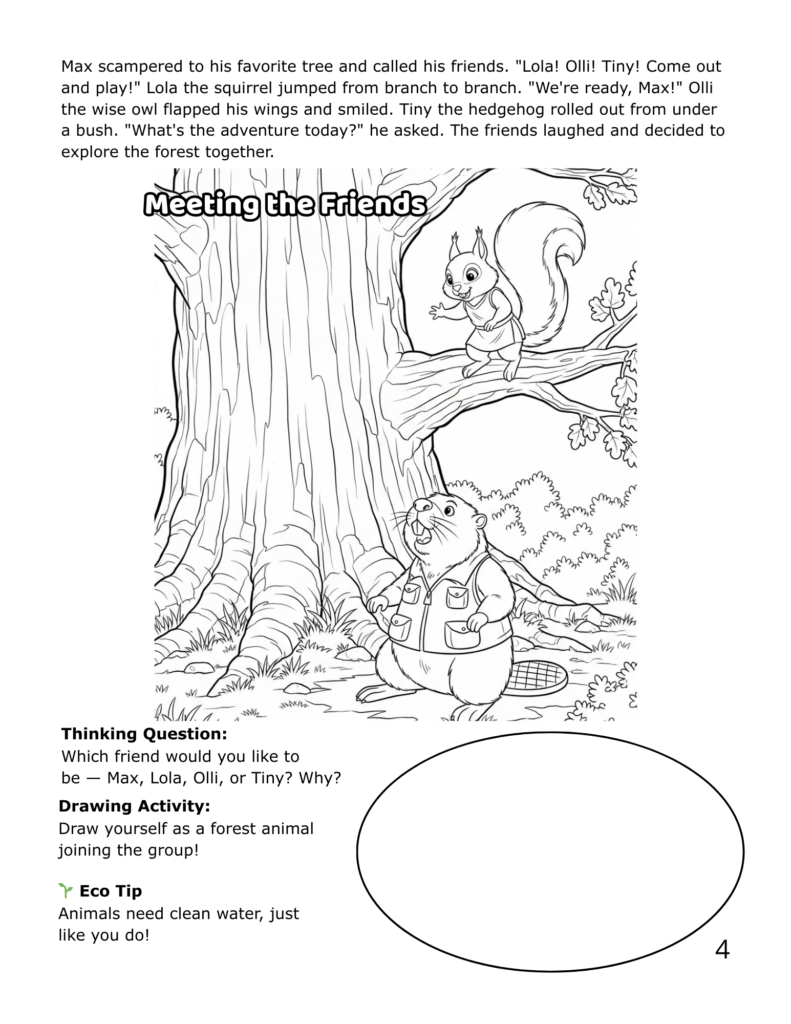
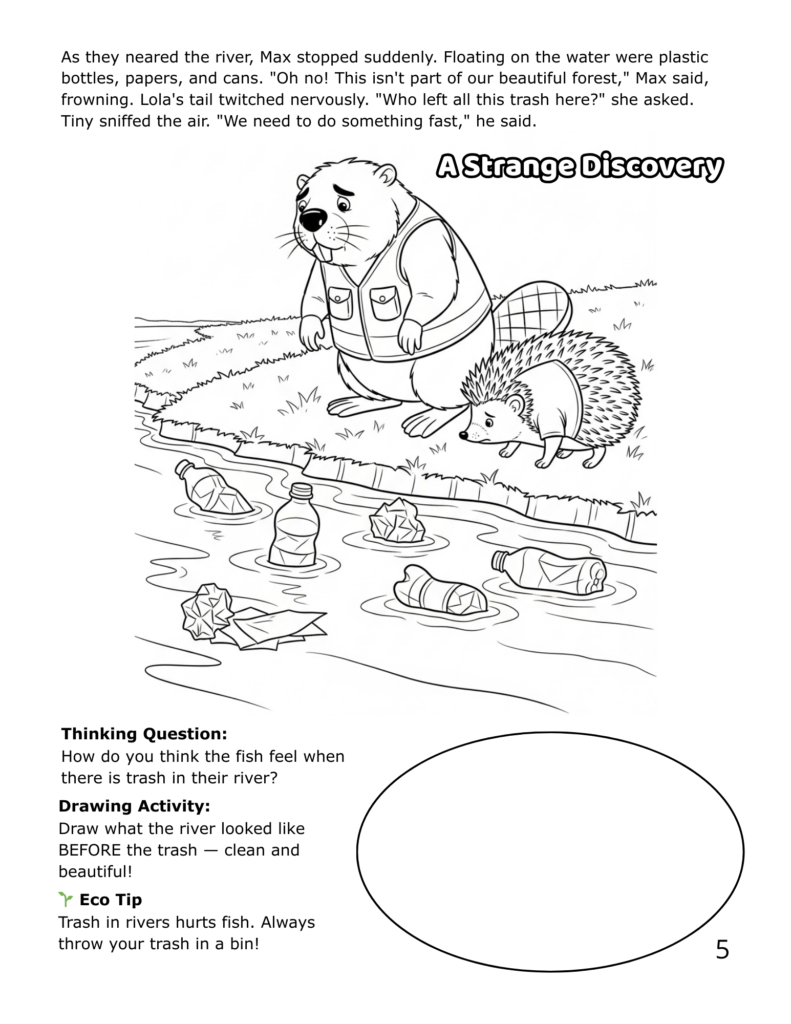
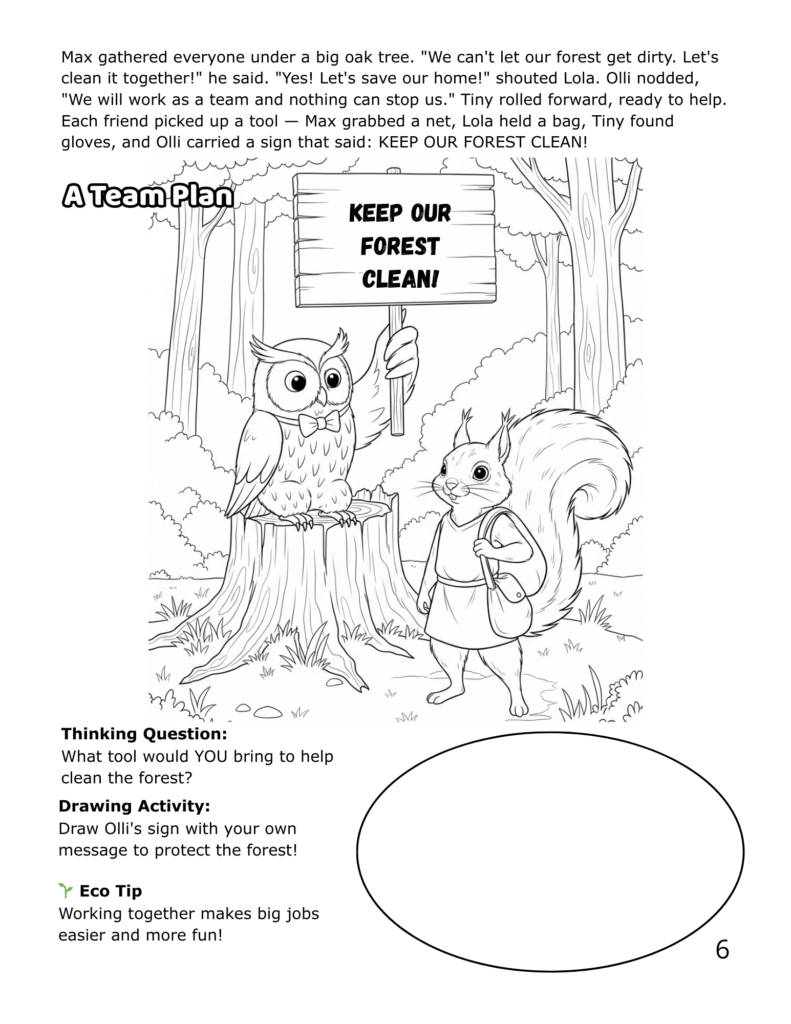
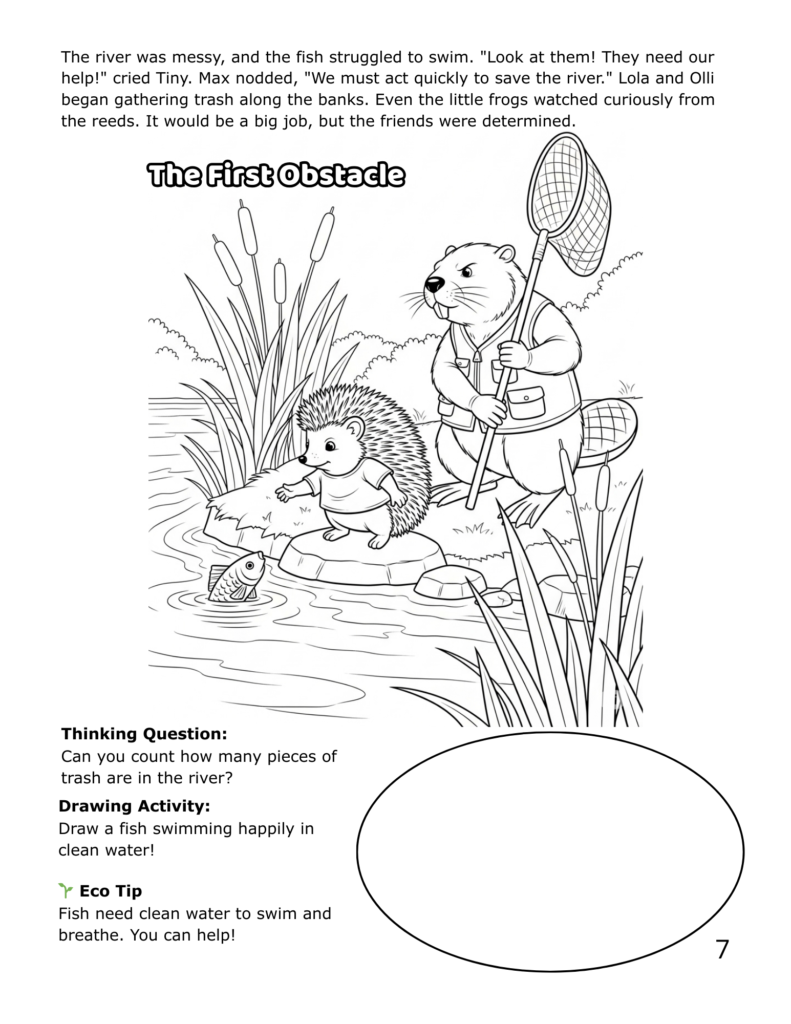
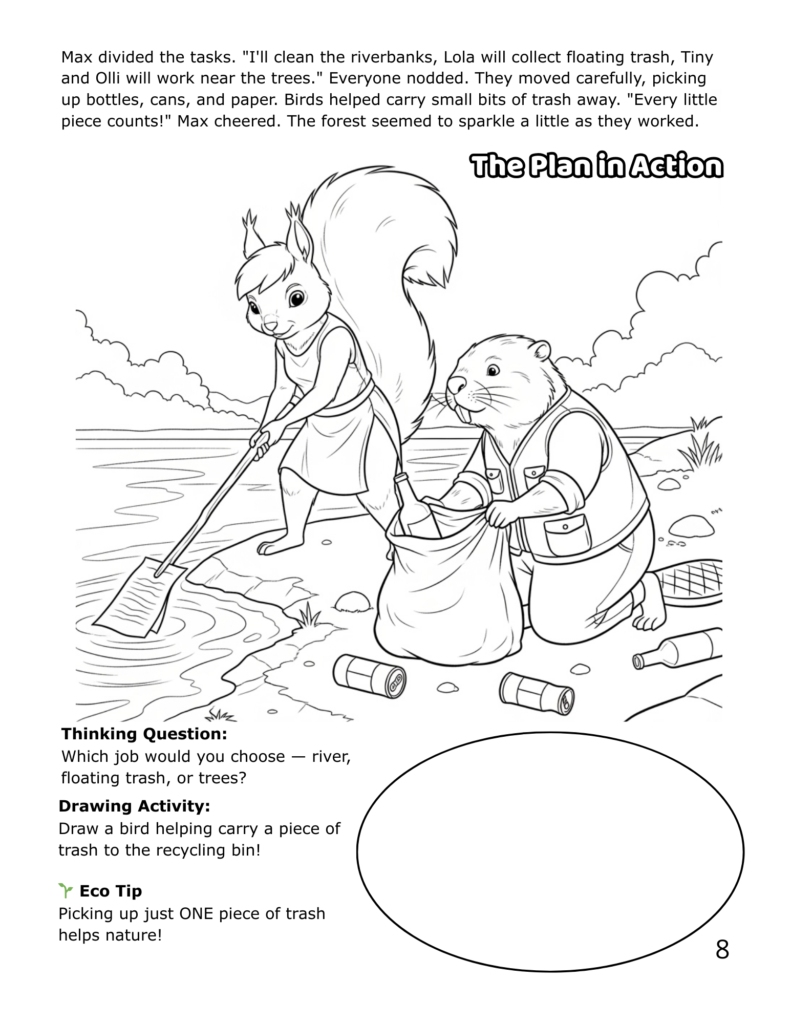
Our recommendation: Adventure in the Eco Forest follows Max the beaver and his friends as they discover their river is full of trash — and refuse to give up until it’s clean again. Every page combines story, coloring, a thinking question, a drawing activity, and a real Eco Tip. It’s not just a coloring book — it’s a complete eco learning experience.
4. Do a Mini Cleanup Together
Nothing teaches environmental responsibility faster than picking up actual litter. It’s hands-on, immediate, and deeply satisfying for children.
Try this: On your next walk, bring a small bag and challenge your child to find 10 pieces of litter to pick up. Make it a mission. Celebrate when you’re done — you just made your neighborhood cleaner together.
Children who have physically cleaned up a space develop a strong sense of responsibility for keeping it clean.
5. Let Them Teach Others
The fastest way to cement a lesson is to teach it to someone else. When your child explains recycling to a grandparent or shows a friend how to sort trash, they own that knowledge in a completely new way.
Try this: After reading an eco story together, ask your child: “Who could we teach this to?” Let them lead the lesson. You’ll be amazed at what they remember — and how proud they feel.
The Eco Hero Mindset
Raising an eco hero isn’t about perfection. It’s about building a mindset — the belief that individual actions matter, that nature is worth protecting, and that even a small child can make a real difference.
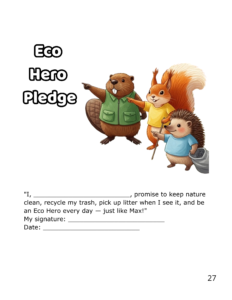
Max the beaver is just a beaver. But to a 5-year-old coloring his adventure, picking up trash, answering questions about the river, and signing the Eco Hero Pledge at the end — Max is proof that anyone can change the world.
Start the Adventure Today
Adventure in the Eco Forest is a 24-page interactive coloring book for kids ages 4–8. Every page includes a story, coloring illustration, thinking question, drawing activity, and Eco Tip. Plus an Eco Hero Pledge your child will be proud to sign.
Instant PDF download. Print as many times as you want. Perfect for home, classroom, and Earth Day.
A StoryColor Creation — www.storycolor.art